Tree Trimming Guide for Alabama & Tennessee Homeowners
Professional tree trimming in Alabama and Tennessee protects your property, extends tree life, and prevents storm damage. The best time to trim most trees in this region is late fall through winter (November–February), when trees are dormant. Hiring a licensed, ISA-certified tree service like Ogle Tree Service LLC ensures safe, expert results that DIY trimming cannot match.
A mature oak shades your back porch through a scorching Alabama summer. A row of tall maples lines your Tennessee driveway, turning gold every fall. These trees are assets—real ones. According to the Arbor Day Foundation, well-maintained trees can increase residential property values by 3% to 15%. The USDA Forest Service puts that figure closer to 10% on average.
But trees only deliver that value when they're properly maintained. Left unchecked, overgrown branches become liabilities—threatening your roof, power lines, and family. A single storm can turn a neglected limb into thousands of dollars of damage overnight.
That's where professional tree trimming comes in. Ogle Tree Service LLC, a BBB-accredited, ISA and TCIA member company serving North Alabama and Southern Middle Tennessee since 2017, has helped hundreds of homeowners protect their properties through expert tree care. This guide covers everything you need to know about tree trimming in this region—from timing and techniques to safety risks and how to choose the right service.
Why Is Tree Trimming Essential for Homeowners in Alabama and Tennessee?
How Does Tree Trimming Affect Property Value and Curb Appeal?
First impressions matter. Overgrown, unruly trees can drag down curb appeal just as fast as a neglected lawn. Conversely, well-shaped trees with clean lines and healthy canopies make a property look cared for and inviting.
According to research published in Arboriculture & Urban Forestry by the International Society of Arboriculture (ISA), trees contribute an average of 7% to residential property value—and up to 15% on certain lots. That's not a minor detail when it comes time to sell. Buyers notice.
Regular trimming keeps trees proportional to your home, prevents them from encroaching on structures, and gives your landscape a polished, intentional look. It's one of the highest-return landscaping investments a homeowner can make.
How Does Trimming Promote Long-Term Tree Health?
Trimming isn't just cosmetic. Removing dead, diseased, or crossing branches allows a tree to redirect its energy into healthy growth. It improves air circulation through the canopy, which reduces fungal infections and pest pressure. It allows sunlight to penetrate the interior of the tree, supporting leaf development and photosynthesis.
Without regular trimming, weak branches accumulate. Disease can spread from one limb to the rest of the tree. Root systems compete with poor structural growth above. Over time, a tree that could have thrived for decades begins to decline far earlier than it should.
When a tree reaches a point where trimming isn't enough, professional tree removal may become necessary to protect the surrounding landscape and structures. Staying ahead of tree health through routine trimming and pruning is always the more cost-effective path.
How Does Tree Trimming Reduce Safety Risks in Storm-Prone Regions?
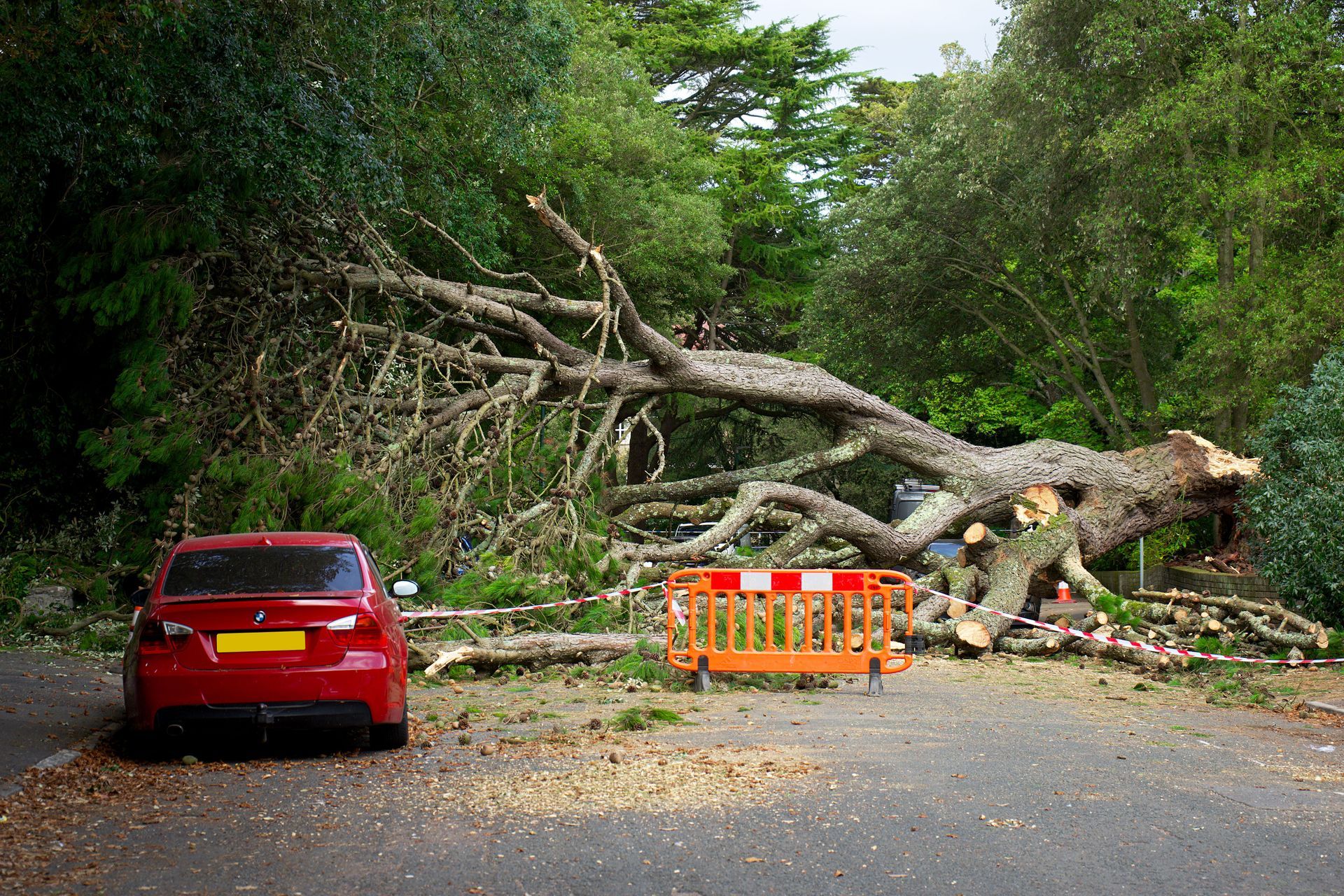
North Alabama and Southern Middle Tennessee sit squarely in one of the most storm-active regions in the country. Severe thunderstorms, straight-line winds, and tornadoes are seasonal realities. Weak, overgrown, or dead limbs become projectiles in high winds.
Branches that hang over your roof, garage, or vehicle are a latent threat year-round. Limbs growing toward power lines compound the danger further—both for your property and for utility infrastructure. Routine trimming eliminates these hazards before they become emergencies.
When storms do strike, 24/7 storm damage and emergency tree services become critical. Proactive trimming, however, dramatically reduces how often you'll ever need that call.
What Are the Different Types of Tree Trimming?
Not all trimming serves the same purpose. A certified arborist will select the right technique based on the tree's species, age, condition, and location on your property.
- Crown Thinning: Selectively removing branches throughout the canopy to improve light penetration and airflow. This technique reduces wind resistance and lowers storm damage risk without significantly changing the tree's overall shape.
- Crown Raising: Removing the lower branches of a tree to increase vertical clearance. This is commonly used to clear sight lines, allow pedestrian or vehicle passage, or lift canopies away from roofs and structures.
- Crown Reduction: Reducing the overall size of the tree by cutting back branch tips to lateral branches. This technique is used when a tree has outgrown its space—near buildings, power lines, or other trees.
- Deadwood Removal: Targeting and removing dead, dying, or structurally compromised branches. This is one of the most critical trimming types for safety. Dead limbs can fall without warning, even on calm days. Regular trimming and pruning services should always include a deadwood assessment.
- Vista Pruning: Strategic removal of specific branches to open up or frame a particular view—a hillside, a garden feature, or a distant landscape. More common on larger rural and estate properties.
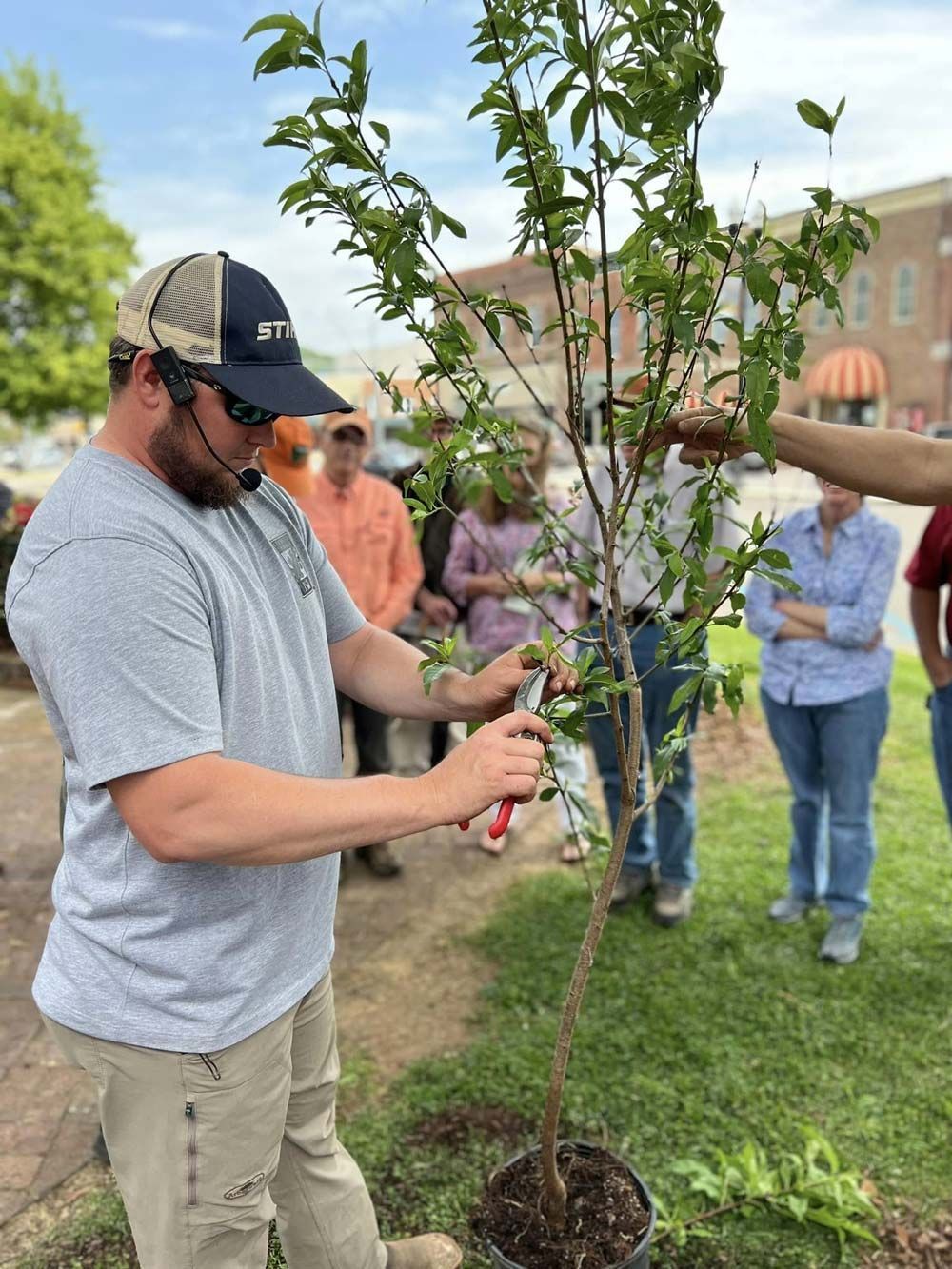
Each of these techniques requires knowledge of tree biology and proper cutting angles. An incorrect cut can introduce disease, cause bark damage, or lead to structurally weak regrowth.
When Is the Best Time to Trim Trees in Alabama and Tennessee?
Timing matters as much as technique. Trimming at the wrong time can stress trees, spread disease, and stunt seasonal growth.
What Is the Best Season for Tree Trimming in North Alabama and Tennessee?
Late Fall Through Winter (November–February) — Best Overall
This is the ideal window for most trimming work in this region. When trees enter dormancy, their energy reserves consolidate into roots and structural tissue. Without active sap flow or leaf production, trimming causes minimal stress. Wounds compartmentalize more effectively, reducing the risk of disease and pest infiltration.
Dormant-season trimming also gives arborists a clearer view of a tree's structure without foliage obscuring weak unions, crossing branches, or dead wood.
This timing is especially critical for oak trees, which are susceptible to oak wilt—a devastating fungal disease spread by beetles that are most active during warm months. Trimming oaks between January and February significantly reduces exposure risk.
Early Spring (March–April) — Suitable with Caution
Corrective trimming and light shaping can still be done in early spring before new growth fully unfolds. This window works well for summer-blooming trees and for addressing winter storm damage. However, avoid trimming spring-flowering species like dogwoods and redbuds before they bloom, or you'll sacrifice the season's flowers.
Summer (June–August) — Emergency and Maintenance Only
Summer trimming should be limited to removing water sprouts, suckers, and minor corrective shaping. It's also useful for identifying branches that failed to leaf out—a sign of disease or die-back. Avoid heavy pruning in extreme heat, as this compounds tree stress.
Fall (September–October) — Generally Not Recommended
As trees begin entering dormancy in fall, open trimming wounds are slow to close and remain vulnerable to fungal infection during a period of elevated spore activity. The exception is emergency removal of hazardous or storm-damaged limbs—which should never wait regardless of season.
What Are the Signs That Your Trees Need Professional Trimming?
Some situations are urgent enough that they shouldn't wait for the ideal seasonal window:
- Cracked, hanging, or dead limbs — These can fall without warning and should be addressed immediately.
- Branches within striking distance of your roof, gutters, or HVAC equipment — Contact with structures accelerates wood decay and allows pests to access your home.
- Limbs near or touching power lines — Never attempt to trim these yourself. This requires a licensed professional with proper equipment.
- Branches rubbing against each other — Friction wounds create entry points for disease and insects.
- Canopy imbalance or significant lean — Structural asymmetry can indicate root instability or internal decay.
- Post-storm assessment — Any major storm event warrants a professional inspection. Damage isn't always visible from the ground. Emergency tree services can provide rapid assessment and safe removal of compromised trees.
Why Is DIY Tree Trimming Risky?
The appeal of handling tree trimming yourself is understandable. A YouTube tutorial, a rented chainsaw, and a Saturday afternoon—it seems manageable. The reality is far more complicated, and the risks are serious.
What Safety Hazards Do Homeowners Face When Trimming Trees?
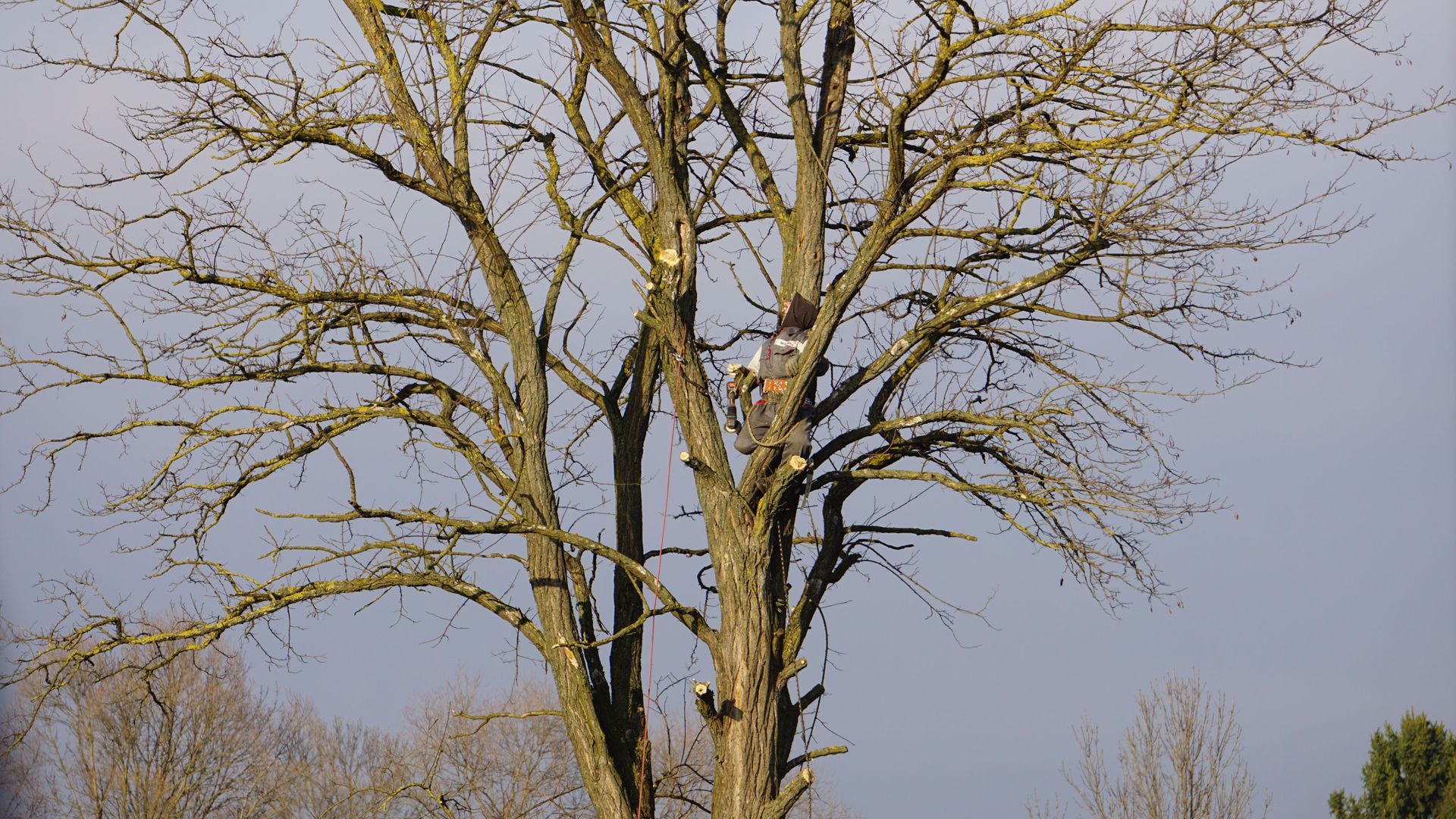
Tree trimming involves working at significant heights, managing sharp tools, and predicting the trajectory of heavy falling branches—often in variable wind conditions. Falls from ladders and improper chainsaw use contribute to thousands of emergency room visits across the country each year.
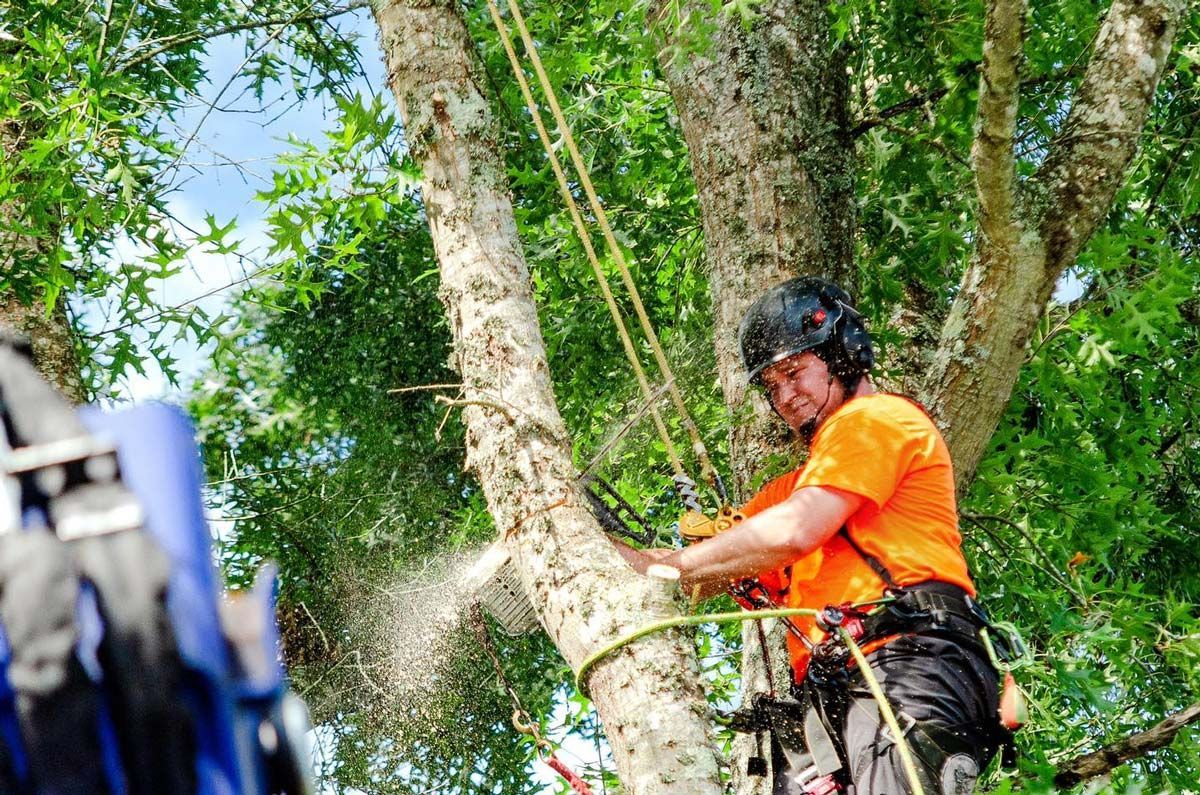
Even experienced DIYers routinely misjudge branch weight. A limb that appears manageable at ground level can behave unpredictably once partially cut. Without the rope rigging, harnesses, and aerial equipment that professionals use, there is no reliable way to control where a branch falls.
Branches growing near or into power lines carry an additional risk that no homeowner should accept: electrocution. Utility lines carry voltages that are instantly lethal. Certified arborists understand how to assess and safely work near electrical infrastructure—DIYers do not have this training.
How Does Improper Trimming Damage Trees?
Bad cuts don't just look wrong—they cause lasting structural harm. Cutting too close to the trunk removes the branch collar, which contains the specialized cells that seal pruning wounds. Cutting too far out leaves a stub that rots inward over time. Either mistake creates an entry point for decay, insects, and disease.
Topping—the practice of indiscriminately cutting back main branches to reduce height—is particularly destructive. It stimulates rapid, structurally weak regrowth, disfigures the tree permanently, and dramatically shortens its lifespan. ISA-certified arborists are specifically trained to avoid this practice and use appropriate crown reduction techniques instead.
What Are the Legal and Financial Consequences of DIY Tree Work?
A branch that falls on your neighbor's fence, vehicle, or home can expose you to significant liability. If the damage resulted from work you performed without professional oversight, your homeowner's insurance may not cover the claim—particularly if the hazard was visible and unaddressed beforehand.
Many municipalities also regulate tree trimming near utility easements or within certain species protections. Violating these ordinances—even unintentionally—can result in fines.
The cost of professional trimming is almost always less than the cost of repairing the damage that improper DIY work causes.
When Does Tree Trimming Require Specialized Equipment?
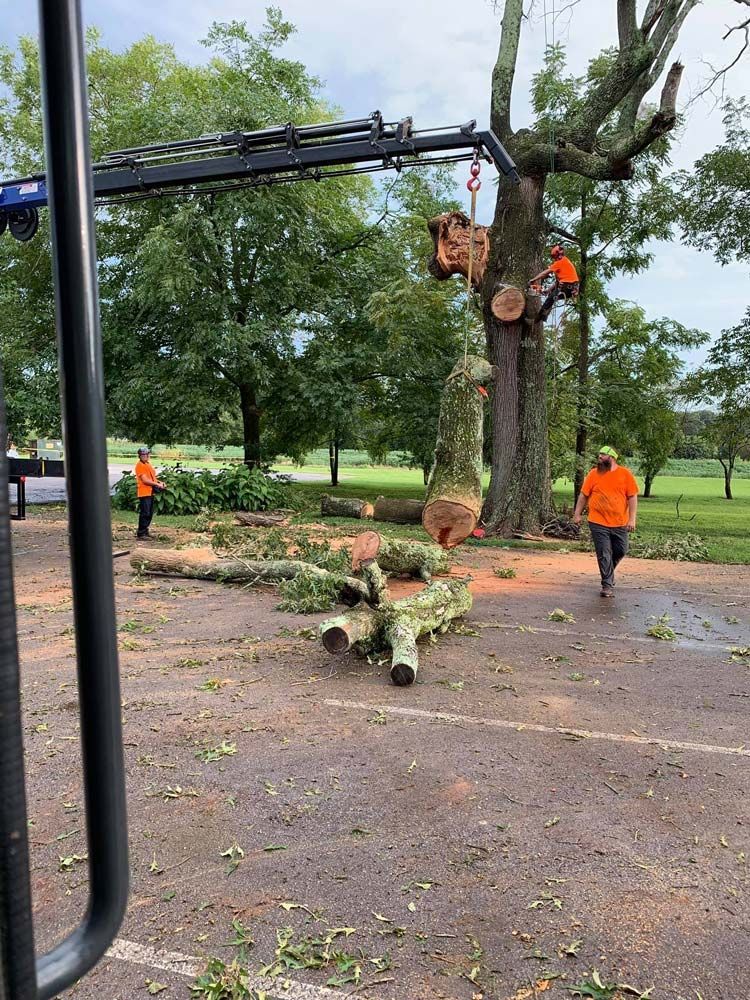
Large or structurally compromised trees near structures require more than ladders and chainsaws. Crane-assisted removal and trimming is the safest method available for high-risk jobs—allowing the crew to control exactly where each section of a tree lands, with zero margin for error. This is particularly relevant for trees growing close to rooflines, in tight lots, or over driveways and vehicles.
Ogle Tree Service LLC operates advanced crane-assisted removal equipment that most tree service providers in the region don't carry in-house. This capability is a meaningful differentiator when the stakes are high.
How Do You Choose the Right Tree Trimming Service in Alabama and Tennessee?
With a range of tree companies operating across North Alabama and Southern Middle Tennessee, knowing what to look for protects you from poor work, property damage, and uninsured liability.
What Qualifications Should a Tree Service Have?
ISA and TCIA Membership
Membership in the International Society of Arboriculture (ISA) and the Tree Care Industry Association (TCIA) signals that a company operates according to industry standards for safety, technique, and ethics. Ogle Tree Service LLC holds active membership in both organizations.
Licensing, Insurance, and Workers' Compensation
Always verify that a tree company is fully licensed, carries general liability insurance, and provides workers' compensation coverage for its crews. If a worker is injured on your property and the company lacks workers' comp, you could be held liable. Ogle Tree Service is fully licensed, insured, and workers' comp covered.
Third-Party Reputation
BBB accreditation and third-party awards carry weight because they require accountability. Ogle Tree Service has earned both BBB accreditation and the #1 Best in Business Award—and maintains a 4.9-star rating on Google from 61+ verified reviews.
Specialized Equipment
A company's equipment reflects its capabilities. Advanced crane-assisted services allow for safe removal of trees that would otherwise pose serious risk to surrounding structures. Ask what equipment the company owns and operates in-house before booking.
24/7 Emergency Response
Storms don't keep business hours. A tree service that can respond at any hour to an active hazard is worth its weight. Ogle Tree Service provides
24/7 emergency storm response —a critical capability in a region with tornado and severe storm exposure.
What Questions Should You Ask Before Hiring a Tree Service?
Before signing any agreement, ask:
- Are you fully licensed and insured, including workers' compensation?
- Do you have ISA-certified arborists on staff?
- Can you show proof of your BBB standing or industry affiliations?
- Do you operate your own crane, or do you subcontract?
- What is your cleanup process after the job is complete?
- Can you provide local references?
A legitimate company will answer every one of these questions without hesitation.
Beyond Trimming: What Other Tree Care Services Protect Your Property?
Tree trimming is an essential part of a broader property care strategy—but it's rarely the only service a well-maintained property requires.
Tree Removal : When a tree is dead, severely diseased, structurally compromised, or dangerously positioned, removal is the safest course of action. Professional removal—especially with crane-assisted equipment—ensures the process protects your home, landscaping, and adjacent structures throughout.
Stump Grinding : After a tree is removed, the stump remains a tripping hazard, an obstacle to mowing, and a potential host for wood-boring insects. Stump grinding removes the stump below ground level, allowing the area to be replanted or landscaped cleanly.
Brush and Lot Clearing : For homeowners managing larger properties, undeveloped lots, or land being prepared for construction or landscaping, professional lot clearing addresses overgrowth, invasive species, and accumulated debris at scale.
Storm Damage and Emergency Services : When severe weather strikes, fast response matters. Ogle Tree Service responds 24/7 to storm damage—clearing fallen trees from structures, driveways, and roads, and assisting with insurance documentation when needed.
The Right Service Makes All the Difference
Trees are a long-term investment in your property. Managing that investment well means trimming at the right time, using the right techniques, and working with a team that has the credentials, equipment, and local experience to do the job safely.
For homeowners across North Alabama and Southern Middle Tennessee, Ogle Tree Service LLC provides exactly that—ISA and TCIA membership, full licensing and insurance coverage, advanced crane-assisted capabilities, award-winning reputation, and round-the-clock emergency availability.
Ready to protect your trees and your property? Request a free quote from Ogle Tree Service or call (931) 993-4722 to speak with a tree care professional today.
Frequently Asked Questions About Tree Trimming in Alabama and Tennessee
When is the best time to trim trees in Alabama and Tennessee?
The best time to trim most trees in Alabama and Tennessee is during late fall and winter, roughly November through February. During dormancy, trees experience less stress from trimming, wounds heal more effectively, and the risk of spreading disease or attracting insects is significantly reduced. Winter trimming also prepares trees for vigorous spring growth.
How often should trees be trimmed in North Alabama and Tennessee?
Trimming frequency depends on the tree's species, age, and condition. Young trees benefit from annual structural trimming to build a strong framework. Mature trees generally need trimming every two to five years. Fruit trees should be pruned annually. Any tree showing signs of disease, storm damage, or proximity hazards to structures should be assessed and trimmed as needed, regardless of the regular schedule.
Is it safe to trim trees near power lines yourself?
No. Trimming branches near power lines without proper training and equipment carries a serious risk of electrocution and should never be attempted as a DIY project. A licensed, certified tree service company with experience working near utility infrastructure is required for this type of work.
What is crane-assisted tree removal, and when is it necessary?
Crane-assisted tree removal involves using a crane to safely extract large sections of a tree with precision and control—particularly useful when a tree is located close to a home, garage, vehicle, or other structure where a standard felling approach would risk property damage. Ogle Tree Service LLC operates advanced crane-assisted equipment in-house, which allows the team to handle high-risk removals safely and efficiently.
What should I do immediately after storm damage to a tree on my property?
Stay away from any fallen or leaning trees, especially those in contact with power lines. Do not attempt removal yourself. Contact a licensed emergency tree service with 24/7 availability. Ogle Tree Service provides emergency storm response around the clock and can also assist with insurance documentation for covered claims.
How do I know if a tree needs to be trimmed or fully removed?
A certified arborist can assess the difference. General indicators that trimming is sufficient include isolated dead branches, minor canopy imbalance, and light overgrowth. Indicators that removal may be necessary include widespread internal decay, severe storm damage, significant structural lean, disease affecting more than half the canopy, or dangerous proximity to structures without viable pruning solutions.
Does tree trimming increase property value?
Yes. According to the Arbor Day Foundation, well-maintained trees can increase residential property values by 3% to 15%. The USDA Forest Service estimates the average increase at approximately 10%. ISA research confirms that trees contribute around 7% to the value of an average property. Regular trimming keeps trees healthy and visually appealing, directly supporting that value.
Ogle Tree Service Blog