Best Time to Trim Trees in Alabama by Type
For most trees in Alabama, late winter—January through February—is the best time to trim. Trees are dormant, pests are inactive, and the branch structure is fully visible. Oak trees must never be trimmed between March and June due to oak wilt risk. Flowering, evergreen, and fruit trees each follow species-specific timing that differs from this general rule.
Your trees are working hard every day—absorbing carbon dioxide, managing stormwater, shading your home, and adding thousands of dollars in property value. But an overgrown or structurally weak tree can flip from an asset to a liability in a single severe storm.
Timing is everything when it comes to tree trimming. Cut at the wrong time of year and you can expose your trees to deadly fungal diseases, attract destructive beetles, or set off a cycle of weak regrowth that causes structural problems for years. Cut at the right time and you give your trees the best chance to heal quickly, grow strong, and weather Alabama's unpredictable storm seasons.
Alabama's climate adds another layer of complexity. Hot, humid summers create ideal conditions for fungal pathogens. Ice storms roll through North Alabama every few years. Tornado season runs March through May—directly overlapping with some of the most dangerous windows for trimming certain species. Understanding how these local factors affect your trees is the difference between routine maintenance and accidental damage.
At Ogle Tree Service, we have been serving homeowners, property managers, and commercial clients across Huntsville and North Alabama since 2017. This guide covers everything you need to know about trimming trees in Alabama—from the general seasonal principles to species-specific timing and the situations that require calling a professional immediately.
What Is the Difference Between Tree Trimming, Pruning, and Removal?
People often use "trimming" and "pruning" interchangeably, but they describe different types of work with different goals.
Tree trimming focuses on managing the size and shape of a tree. It's primarily done for aesthetics, clearance (keeping branches away from structures or power lines), and reducing the canopy's wind resistance before storm season.
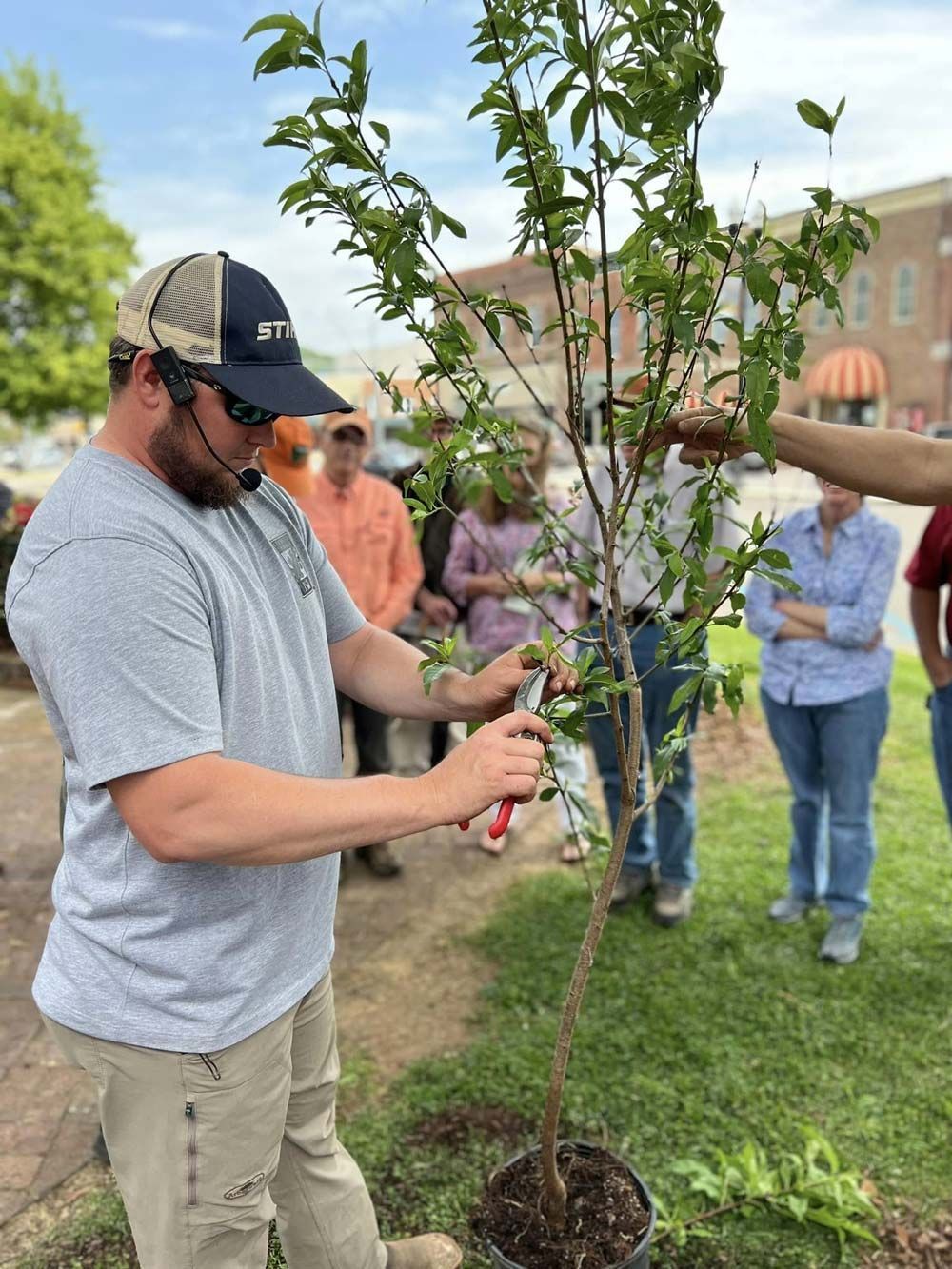
Tree pruning is more surgical. It involves removing specific branches to improve the tree's health, structure, or safety—eliminating crossing limbs, cutting out dead or diseased wood, removing co-dominant stems that could split under load, and improving light penetration into the canopy. Pruning decisions require knowledge of how individual species respond to cuts.
Tree removal is the complete extraction of a tree, typically because it is dead, diseased beyond recovery, structurally hazardous, or needs to be cleared for construction or landscaping purposes.
All three services benefit from correct timing. And all three, when done improperly, can harm the tree—or the people and property around it.
Why Does Proper Tree Trimming Matter Beyond Aesthetics?
The practical case for regular, properly timed trimming goes well beyond curb appeal.
Tree health and long-term growth. Removing dead, diseased, or crossing branches directs the tree's energy toward healthy growth. Pruning cuts made at the right time of year heal faster and more completely, forming strong callus tissue that closes the wound before pathogens can establish.
Storm safety. Alabama sits in one of the most active tornado corridors in the country. Hurricane remnants regularly bring high winds through the Tennessee Valley from August through October. A deadwood limb weighing 50 pounds falling from 50 feet strikes with approximately 2,500 foot-pounds of force—enough to penetrate a roof. Removing deadwood and thinning dense canopies before storm season significantly reduces the risk of property damage and injury.
Disease prevention. Fresh pruning wounds are entry points for fungal spores and boring insects. The timing of those cuts—relative to when specific pathogens are active—determines whether the cut heals cleanly or becomes an infection site.
Property value. Mature, well-maintained trees add measurable value to residential and commercial properties. Neglected trees—especially those showing structural defects or disease—can become liabilities that require expensive emergency removal.
What Are the Risks of Improper Tree Trimming?
The most common mistake homeowners and inexperienced crews make is topping—cutting the main branches back to stubs to reduce height. It feels logical. It's almost always harmful.
Topping removes the leaf surface a tree needs for photosynthesis and cooling, forces the tree to generate rapid, structurally weak "water sprout" regrowth, and creates large wounds that are slow to close. Pine trees, unlike hardwoods, cannot reliably develop replacement leaders after topping—topping a pine typically leads to permanent structural decline. Crape myrtles are topped so frequently in the South that the practice has its own name: "crape murder." It creates permanent knobby stubs and provides no benefit, since crape myrtles bloom on new season growth regardless.
Improper timing compounds these problems. Cutting oaks in spring, pruning dogwoods in summer, or trimming crape myrtles in fall can all trigger consequences that damage or kill trees that would otherwise thrive for decades.
What Are the General Rules for Tree Trimming Seasons in Alabama?
Why Is the Dormant Season the Best Time to Trim Trees in Alabama?
The principle that governs most tree trimming in Alabama is straightforward: trim during dormancy, not during active growth.
Alabama's dormant season runs roughly December through late February. During this period, trees have dropped their leaves, stopped active growth, and entered a resting state. Several advantages follow from this timing:
- Reduced disease and pest risk. Most of the fungal pathogens and boring insects that infect trees through fresh wounds are inactive in winter. Spring is when oak wilt beetles emerge, when pine bark beetles become active, and when dogwood anthracnose spores are airborne. Finishing major trimming before these threats appear significantly reduces infection risk.
- Faster wound healing. Trees form callus tissue around pruning cuts. This healing is most vigorous in the growth surge immediately following dormancy—meaning late-winter cuts heal faster than cuts made in summer.
- Better visibility. A leafless canopy reveals the true branch structure: crossing limbs, co-dominant stems, included bark formations, and structural problems hidden when the canopy is full. Dormant-season pruning allows arborists and homeowners to make better, more informed decisions about what to remove.
When Is Summer Trimming Acceptable in Alabama?
Light trimming for safety reasons is acceptable during the growing season for most tree species. Removing a limb that has cracked after a storm, clearing branches that have grown over a roofline, or cutting deadwood that poses an immediate hazard—all of these warrant action regardless of the calendar.
Heavy structural pruning in summer is different. Removing large limbs in July or August forces a tree to generate replacement growth while managing thermal stress in temperatures that regularly exceed 95°F in Huntsville. The combination can cause significant canopy dieback in already-stressed trees.
What Trimming Should Be Avoided During Extreme Weather?
Avoid trimming immediately before or during ice storms, and during the hottest stretches of Alabama's summer. Post-storm trimming of broken or hanging limbs is a safety necessity, but elective structural work should wait until conditions stabilize.
How Does Alabama's Climate Specifically Affect When to Trim Trees?
Alabama's weather creates tree health risks that make trimming timing more consequential here than in drier regions. Understanding these local factors helps explain why the windows below are not arbitrary.
Humidity and fungal disease pressure. Huntsville averages approximately 55 inches of rainfall annually. Hot, humid summers create near-perfect conditions for fungal pathogens—dogwood anthracnose (Discula destructiva), oak wilt (Bretziella fagacearum), mimosa wilt, and various canker diseases. Fresh pruning wounds in summer function as infection sites that simply do not exist the same way in dry western climates.
Tornado season overlap. Alabama's primary tornado season runs March through May—directly overlapping with the most dangerous window for trimming oak trees. A tree that suffers storm damage in April faces both structural damage and the highest infection risk simultaneously. This combination makes pre-season preparation in January and February especially important.
Ice storm damage. Madison County experiences significant ice storms roughly every three to five years. Trees with heavy deadwood, poor canopy structure, or previous topping damage fail far more often in ice loading. Dormant-season trimming specifically targeting structural deficiencies before winter is a meaningful risk-reduction measure.
Summer heat extremes. Beyond the fungal risks, pruning large limbs in peak summer removes the leaf surface a tree needs for photosynthesis and thermoregulation. This forces the tree to generate replacement growth under maximum thermal stress.
What Is the Best Time to Trim Specific Tree Types in Alabama?
When Should Oak Trees Be Trimmed in Alabama?
Oak trees require the most careful attention to timing of any species in North Alabama. The reason is oak wilt—a fungal disease caused by Bretziella fagacearum that spreads through root grafts between neighboring trees and, critically, through fresh pruning wounds via sap-feeding nitidulid beetles. These beetles are most active in Alabama from March through June.
An oak trimmed in April can be infected within days of the cut. In the red oak group—which includes water oak, Shumard oak, and pin oak—oak wilt can kill within a single growing season.
Safe trimming windows for oaks: December through February (preferred), or July through October if structurally necessary.
Never trim oaks in Alabama from March through June. If storm damage creates open wounds on an oak during this period, apply lacquer-based wound sealant to the cut surfaces within hours to deny beetles a feeding site, and monitor the tree closely for wilt symptoms: yellowing or browning advancing from branch tips inward.
When Should Pine Trees Be Trimmed in Alabama?
Pines are more forgiving of timing than oaks, but they face a specific local hazard: pine bark beetles and Ips beetles, which are attracted to the odor of fresh resin from pruning cuts. These beetles are most active in Alabama from May through September.
Optimal trimming window for pines: November through February.
Avoid major pine trimming from May through September. Pine trimming in North Alabama is typically limited to removing lower dead limbs, crown-raising for clearance, and removing damaged or crossing limbs. Pines do not respond well to topping—unlike hardwoods, they cannot develop reliable replacement leaders, and topping leads to permanent structural decline.
When Should Crape Myrtles Be Trimmed in Alabama?
Crape myrtles are the most commonly mis-pruned trees in the South. The correct trimming window is late January to mid-February, just before bud break.
Correct technique means removing only crossing branches, basal suckers, and small twiggy interior growth. Crape myrtles bloom on new season growth—the flowers will come whether the tree is topped or not. Topping serves no functional purpose. It creates permanent knobby stubs and generates weak water-sprout regrowth that is structurally inferior to the original branches.
Never trim crape myrtles in fall. Removing growth before dormancy is fully established can stimulate new growth that is then killed by frost, weakening the tree heading into winter.
When Should Dogwood Trees Be Trimmed in Alabama?
Flowering dogwood (Cornus florida) is Alabama's state tree and is common throughout Huntsville's residential areas and woodland edges. It is also one of the more disease-prone trees in Alabama's humid conditions, with dogwood anthracnose and powdery mildew being persistent concerns.
Optimal timing: Late April through May for light cleanup after flowering. For structural work, October through November after the tree is fully dormant but before hard frost.
Avoid pruning dogwoods in late summer when fungal diseases are most active. Never remove more than 25% of the canopy at one time, and keep cuts clean.
When Should Fruit and Nut Trees Be Trimmed in Alabama?
Pecan trees should be pruned during the dormant winter season, when nutrients are not actively flowing and the tree is at rest. Dormant pruning allows clean healing before the growing season and supports strong spring production.
Fig trees also follow the dormant-season rule—late winter, before new growth emerges. This minimizes stress and allows the tree to channel its energy into producing fruit rather than recovering from pruning wounds.
What About Deciduous Trees Like Maple, Sweetgum, and Hickory?
These species all follow the general North Alabama principle: late winter dormancy trimming is optimal, targeting the December through February window. Sweetgum in particular benefits from structural pruning every five to seven years to reduce the brittleness that makes it prone to limb failure in ice loading. Maples and hickories both experience heavy sap flow in spring; trimming during that surge increases the risk of excessive sap bleeding and can stress the tree.
When Should You Call Ogle Tree Service? Special Situations and What to Do
Storm Damage and Emergency Trimming: When to Call Regardless of Season
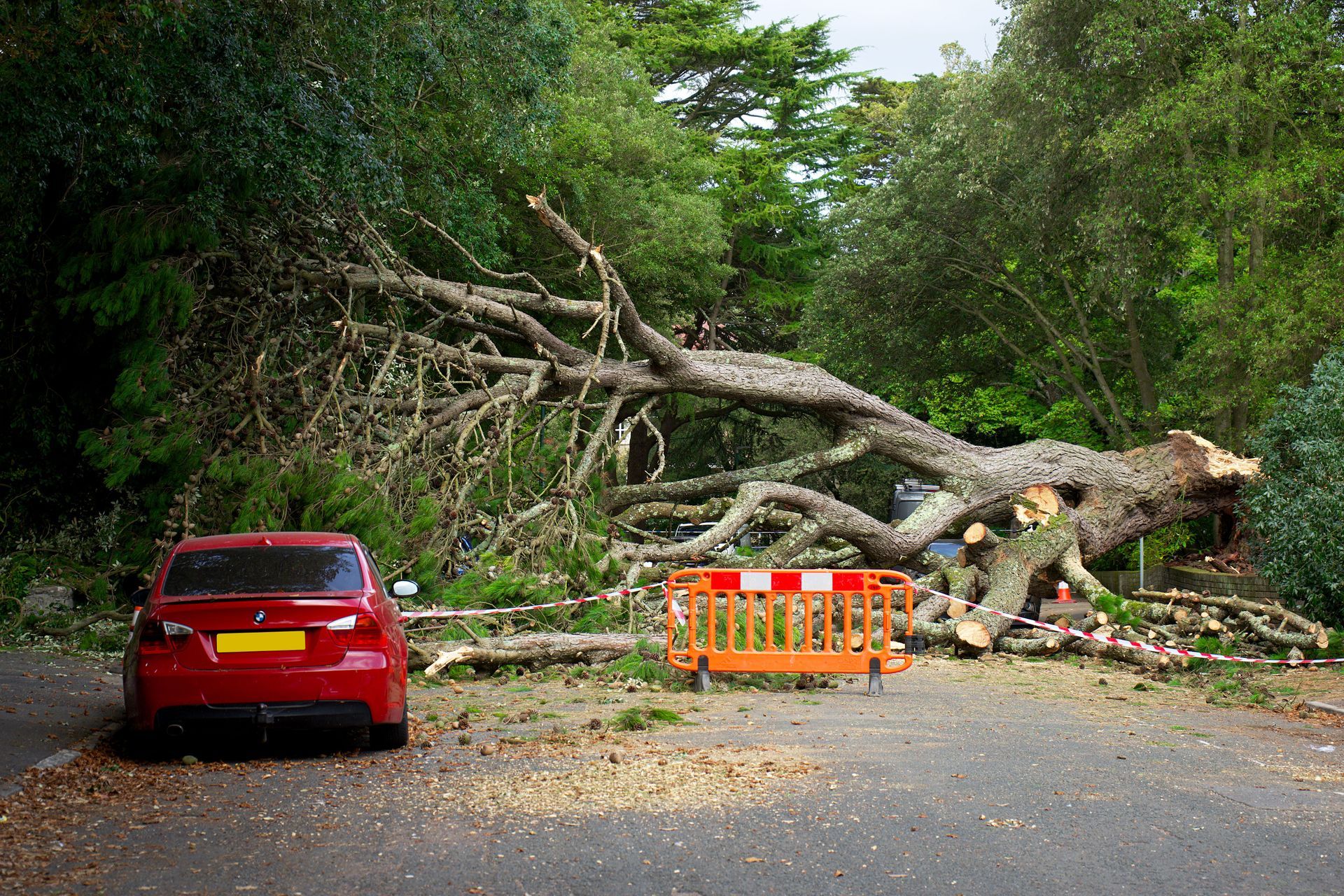
Timing guidelines apply to elective structural trimming. When a storm drops a limb across your driveway, splits a major branch over your roof, or leaves a widow-maker hanging over your yard, the right time to call is immediately.
Ogle Tree Service provides 24/7 emergency response for exactly these situations. The team responds fast to storm-damaged trees, fallen limbs, and hazardous situations across Huntsville and Madison County. After a tornado damaged multiple trees in one Huntsville neighborhood, Ogle's team arrived within hours, cleared the house and driveway, and returned daily until every tree was removed—even helping the homeowner navigate the insurance claim process.
If an oak is among the storm-damaged trees and the damage occurs during March through June, apply wound sealant to exposed cuts within hours. Then call.
Limbs Near Structures and Power Lines: When Expert Equipment Matters
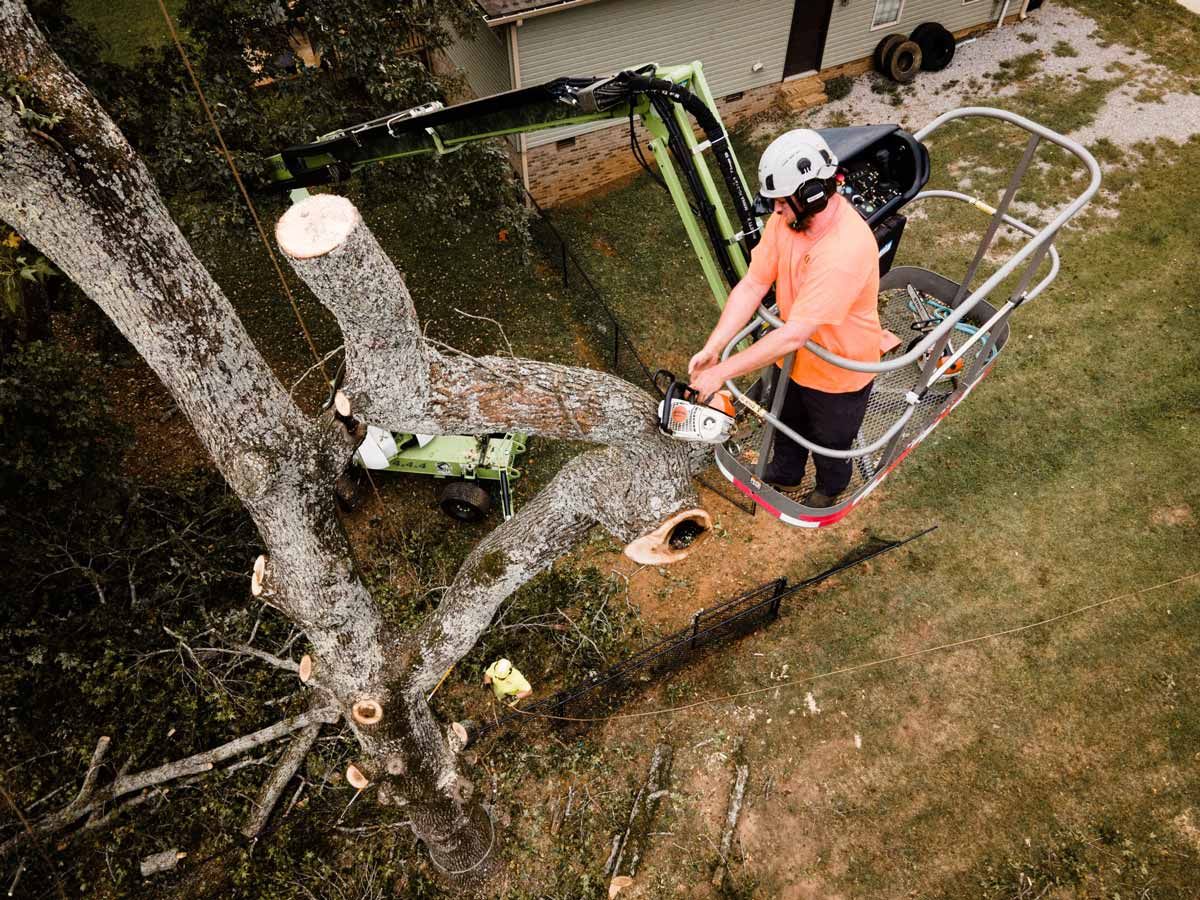
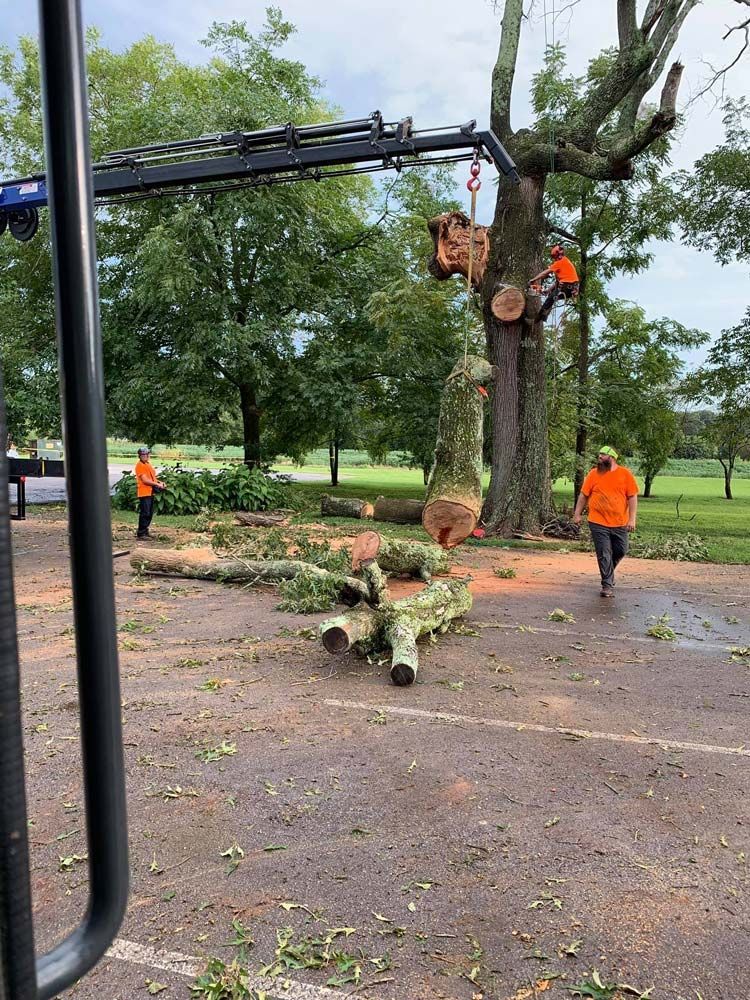
Tree trimming near rooflines, structures, or utility lines requires more than timing knowledge—it requires the right equipment and the experience to use it safely. Ogle Tree Service offers professional tree removal and trimming and pruning services with crane-assisted capabilities for large, complex, or tightly positioned jobs.
The cost difference between proactive trimming and emergency removal after a limb fails onto a structure is significant. The cost of trimming a structurally compromised limb is typically 10 to 20 percent of the cost of emergency removal and subsequent property repairs. Scheduling a professional assessment before storm season closes that gap considerably.
Disease or Pest Infestation: When Immediate Action Is Necessary
Some tree health problems cannot wait for the optimal seasonal window. If you notice sudden yellowing or browning advancing from branch tips inward on an oak, small round entry holes in pine bark surrounded by sawdust frass (indicating beetle activity), or visible fungal growth on a dogwood, these are situations where early professional diagnosis and targeted trimming can mean the difference between saving the tree and losing it entirely.
Ogle Tree Service's certified arborist expertise enables accurate diagnosis of tree health issues and targeted removal of affected limbs before a problem spreads to neighboring trees.
Large or Complex Jobs: When Professional Equipment Is Non-Negotiable
Removing large limbs or entire trees near homes, vehicles, utilities, or other structures is inherently high-risk work. Ogle Tree Service's advanced crane services allow safe extraction of large, hazardous trees with minimal disruption to surrounding property. Every job is performed by fully licensed, insured crews covered by workers' compensation—giving homeowners and property managers protection from the liability exposure that comes with uninsured contractors.
Post-Trimming and Stump Removal: Completing the Job
After trimming or removal, leftover stumps can become tripping hazards, sites for fungal growth, or anchors for root systems that attract insects and disease. Ogle Tree Service's stump grinding service removes stumps below ground level, eliminating regrowth potential and preparing the ground for landscaping or construction.
For properties requiring larger-scale work—clearing overgrown lots, preparing land for construction, or managing multi-tree removal projects—Ogle's brush and lot clearing service handles residential and commercial sites with professional efficiency.
Your Alabama Tree Trimming Calendar at a Glance
- Oaks (all species): Best window Dec–Feb. Avoid Mar–Jun. Key reason: oak wilt beetle transmission.
- Pines: Best window Nov–Feb. Avoid May–Sep. Key reason: pine bark and Ips beetle activity.
- Crape Myrtles: Best window late Jan–Feb. Avoid Sep–Nov. Key reason: frost kills new growth before dormancy.
- Dogwoods: Best window Apr–May or Oct–Nov. Avoid Jul–Sep. Key reason: fungal disease peak.
- Pecan/Fig (fruit trees): Best window Dec–Feb. Avoid Mar–Jun. Key reason: dormant healing, maximizes yield.
- Maple/Sweetgum/Hickory: Best window Dec–Feb. Avoid Apr–Jun. Key reason: heavy sap flow, spring growth stress.
Get Your Trees Ready Before Storm Season
The single most impactful thing North Alabama property owners can do for their trees each year is schedule a professional trimming in January or February. That one window—dormant season, before tornado season and before the oak wilt window opens—addresses the widest range of concerns: structural safety, disease prevention, storm preparation, and long-term tree health.
Ogle Tree Service serves Huntsville, Madison, Hampton Cove, Harvest, Jones Valley, Meridianville, and surrounding communities across North Alabama and Southern Middle Tennessee. The team is BBB Accredited, a #1 Best in Business Award winner, and a member of both the International Society of Arboriculture (ISA) and the Tree Care Industry Association (TCIA).
Ready to get your trees assessed before storm season? Request a free quote or call Ogle Tree Service at (931) 993-4722 . The schedule fills up fast in January—don't wait until the first tornado watch of the year to find out your trees weren't ready.
Frequently Asked Questions About Tree Trimming in Alabama
What is the best time of year to trim trees in Alabama?
Late winter—January through February—is the optimal window for most trees in Alabama. Trees are dormant, harmful beetles and fungal pathogens are inactive, and the leafless canopy allows arborists to clearly assess branch structure. Finishing before March is especially important for oak trees, which must never be trimmed during the March–June oak wilt transmission season.
Can oak trees be trimmed in spring in Alabama?
No. Oak trees should never be trimmed in Alabama from March through June. Nitidulid beetles, which carry oak wilt fungal spores, are most active during this period and are attracted to fresh wound sites. Trimming an oak in April can result in a dead tree by August. The safe windows are December–February or, if structurally necessary, July–October.
When is the best time to trim crape myrtles in North Alabama?
The best time to trim crape myrtles in North Alabama is late January to mid-February, just before bud break. The correct approach is to remove only crossing branches, basal suckers, and spent seed heads—not to top the tree. Crape myrtles bloom on new growth regardless of whether they are topped, so heavy cutting only creates permanent structural damage without any benefit.
Should I trim my trees before hurricane season in Alabama?
Yes. Pre-storm trimming is strongly recommended. Scheduling trimming in January–February allows you to remove deadwood, reduce canopy density, and eliminate structurally weak limbs before tornado season begins in March. A properly thinned canopy allows wind to pass through rather than acting as a solid sail, which significantly reduces the chance of uprooting or major limb failure.
How do I know if a tree needs emergency trimming regardless of the season?
Call a professional immediately if you observe any of the following: a limb hanging at a steep angle over your home or vehicle after storm damage; branches in contact with power lines; a large branch that has partially split but not yet fallen; canopy making direct contact with your roofline; or signs of rapid disease progression such as sudden branch tip dieback on an oak. Emergency safety situations take priority over seasonal timing guidelines.
How much does tree trimming typically cost in Alabama?
Tree trimming costs in Alabama vary based on tree size, species, location relative to structures, and the complexity of the work involved. The cost of proactive trimming is generally 10 to 20 percent of the cost of emergency removal after a limb fails onto a structure. Ogle Tree Service provides free estimates—contact the team at (931) 993-4722 or through the website to schedule an assessment.
Do I need a certified arborist to trim my trees?
For routine light trimming of small trees away from structures, an experienced crew is sufficient. For anything involving large trees, trees near buildings or utilities, suspected disease, or complex structural problems, a certified arborist adds critical value. Ogle Tree Service's arborist expertise allows accurate diagnosis of health issues and informed decisions about which cuts will help the tree versus harm it.
Ogle Tree Service Blog